We are considering acquiring a couple of goats to keep the brush down around here. We have empty fields full of brush that we'd like to clear.
It would be such a waste to just cut it down when it would make great goat forage. we could also have some meat for the freezer and milk, if we had goats. There are only a few of us but I would like to make cheese and we do make a lot of homemade buttermilk, yogurt and soap. I would also want butter.
I know milking is a lot of trouble with the sterilizing and so forth. I already make large quantities of wine. Can the cleanliness be more exacting than that? I have had chickens for years so I know about water in winter and daily care and feed. I have a vet tech for a friend who will give me lessons in trimming hoofs. I could let the milking dry off for a few months each year and share the milking job with the babies for awhile. We could have goat meat in the freezer and sell a few babies too. We could also have a bit of cashmere, maybe.
I just don't know what kind of goats to get. I don't want babied, spoiled barn goats. I want goats that forage outside all year but I want some milk too and meat. Is there one type of multi-purpose goat that lives well outside foraging in the north, gives enough milk for us and has enough body weight for meat and possibly hair that we can breed up for a bit of cashmere? What about Spanish goats? Does anyone keep these for milk, as well as meat?
Should we get a mix of breeds, maybe one dairy goat and one meat goat to start with? What is a good, outdoor hardy, northern goat for milk and for meat? There is a farm nearby with Spanish goats which are bred to produce cashmere. That's why I am asking. Will I be able to get enough milk from a couple of Spanish goats to do what I want with it? Any breed can produce cashmere, or so I have been told, if bred for it. They will also have to eat a lot of brush! I know we need sheep for the little grass but we are not concerned about lawn, we want the brush eaten. We are over run with thistle, curly dock, burdock, goldenrod, mustard and wild raspberries.
I have researched goats for years, but more for care than breeds.
Is there anyone out there nearby with a couple of goats we could acquire that would meet out needs? Am I asking too much from one breed of goat?
I know about the fencing problems. Been there, done that! I know there is no such thing as a goat proof fence. We are installing a double wire live electric fence.
I am more concerned at this point with getting the right goats for us.
Anyone have any advice on breed and locating them?

Showing posts with label farm. Show all posts
Showing posts with label farm. Show all posts
Friday, July 1, 2011

Tuesday, June 7, 2011
Today's Harvest

Spinach and rhubarb! I chopped the rhubarb and put it in the buckets in the freezer. I have almost enough now to make five gallons of rhubarb wine! I'll do another cutting at the end of June and that will be it. The plant needs to grow and nurish itself for the rest of the summer. I found the stalks to be a bit thinner this year. It needs to be fertilized. I think I will add a mulch of old sheep manure soon.

The spinach was chopped small and frozen under water in ice cube trays. When it is frozen solid, I will pop it out and put it in a big freezer bag with the previous spinach from this year.
It's so handy all year long in ice cube size servings from the freezer. I just toss a few of them into just about anything. It's very good for you!
Thursday, May 26, 2011
Planting for 2011

Most of the planting has been done for this year! I still have some tiny seedlings too small for the garden yet, but on the whole, most things are out there. The seedlings that I still have potted are mostly herbs and baby grapevines for the upcoming vineyard and a
few perennials.
We have cut back on the vegetables we are growing, wanting to use that time and space for other, more interesting things. We've added a lot more berries this spring and more herbs too and will soon be installing a vineyard for our new 'Valiant' grape vines.
Here is a comprehensive list of what we have planted this year. I am sure there are a few things that I have forgotten. I will be writing future posts throughout the summer to introduce you to a few rare and new things on this list.
Squash:
Hopi black (our favourite)I planted 14 of these plants!
Hopi pale gray
Turk's cap
Sweet dumpling
Upper ground sweet potato squash (Grows in the poorest soil and conditions!)
Tomatoes:
Our Portugal beefhearts
San Marzano
Ailsa Craig
Manitoba
Rev Morrow long keeper
Gordon Graham original world's largest tomato seeds (Only 1 plant growing)
Beans:
Yellow wax beans bush
Kentucky Wonder yellow pole beans
Scarlet runners
Stringless blue lake green pole
Gold of Bacau yellow pole
French Duet pole
Dow Gauk yard long green
Gradma's Mushroom beans pole
Peppers:
Bells red, orange, dark purple
Mixed mini bells
Giant green bell
White Habanero hot
Red cheese sweeet
Feherozon
Lipstick Sweet
Jimmy Nardello
Corbaci sweet
Only the bells are big enough for the garden yet. Hopefully I will get peppers from the others this year. We need some heat! I want them for seed sales!
Others: (Up and growing)
Sweet peas
Blue native organic corn (For ginding and fodder. Has 28% more protein!)
Tobacco Virginia Gold
Cantaloupe (14 of these plants. Wine!)
Giant watermelon (Only 3 came up :-(
Large globe onions
Ground cherries
Spinach
Lettuce
Basil
Parsley
Catnip
Thyme
Lemon balm
Cilantro
Oregano
Celery
Rosemary
Flax
Quinoa
Chia
Lavender Muntead
Stevia (Only one came up)
Impatiens glandulifera
Planted but not up yet:
Haskap honeyberries
Cranberries
Blueberries
Hostas mixed
Lupins
Sea Buckthorn
Black currant
Jacob's ladder
Rugosa roses
Stevia
Purple leaf sand cherry
Amaranth intense purple
Amaranth red
Chichiquelites (Garden huckleberry)
Perennials and herbs still growing in our gardens: (not ornamentals)
Rhubarb
Strawberries
Raspberries
Blackberries
Gooseberries
Haskap honeyberries
Black mulberry
Black elderberry
Saskatoon berry
Black Currant
Green onions, scallions
Thyme
Oregano
Chives
Garlic Chives
Mint
Lemon Mint
Hibiscus
Comfrey
Red Bee Balm
Echinecea
St.Johns wort
Wild Evening primrose
Red clover
Motherwort
Feverfew
Chicory
Lappa Burdock (Close relative of the artichoke. Taste like them too!)
Heal all
Boneset
Yarrow white and red
Many of the medicinal herbs at the end of the list are not grown in the kitchen herb garden, but are planted in a space to themselves, where I leave them to do their own thing most of the time. The grass and weeds don't seem to bother them. They actually do better if left alone to grow wild, so I don't coddle them.
This is a fairly comprehensive list. As you can see, we have little room for much in the way of plain old ordinary vegetables! No zucchini this year. We just don't eat it often enough to grow it. No garlic either. It is always on my list of things I want to grow, but in the fall when it needs to be planted, I am busy and tired of gardening. Maybe this year, in October, I will plant some. No potatoes or carrots. Both of these grow on local farms nearby so are cheap and plentiful in the fall. No sweet potatoes this year. I grew them last year but decided that they weren't worth the time and effort.
Today's Harvest

Spinach and asparagus! I know it's not much but it's still spring here.
I have been cutting the rhubarb and freezing it. I'm hoping to get enough this year to make five gallons of rhubarb wine!
 We do have many flowers in bloom now too!
Things are growing!
Friday, March 18, 2011
Growing and Supporting Tomatoes

The picture above is a photo of my garden in 2009. These are our 'Portugal' tomatoes growing. That was a bumper year for tomatoes.
I inherited a pile of 6' metal fence posts that have been handy in the garden. I usually stretch wire between them on which to grow things, like tomatoes, cukes, peas.
This year I am considering another option. I also have some fencing that is really a large roll of reinforcing wire. I want to make a few of these for the tomatoes, one set for each of the tomato varieties that I want to plant this year:


The wire will be in two pieces, two "L"s, which I will remove from the post in the fall and
store separately.
These are indeterminate tomatoes, meaning they grow continually larger until the frost takes them. Determinate tomatoes have a preprogrammed, default setting causing them to stop growing when they reach maturity which makes them better for short seasons. I grow these indeterminate ones anyway. I'm always pushing the growing season. These are HUGE plants and have to be controlled by pruning.
I prune most of the suckers off all summer and cut the tops off of my indeterminate tomato plants around mid August. They do keep trying to grow after the top has been cut off, putting out even more suckers and more tops. I just keep trimming it back, forcing it to put as much growth as possible into the tomatoes. This makes for very large tomatoes.
We still get green tomatoes at the end of the season. To help the plant ripen what is there, I cut the roots about halfway around the plant when it gets about two weeks before our first frost date. This does help, although we still get green tomatoes.
Some tomatoes will keep all winter in our cold cellar wrapped separately in newspaper. Each tomato individually wrapped and not touching others, set on wood to keep dry. Sometimes they will stay green enough and good until mid winter, when they can be taken out and put into the kitchen to finish ripening. Not all tomatoes will do this, but a few will. If you find a good keeper tomato, you can have garden tomatoes at Christmas!
I have some seeds I got in a trade for some good "keeper" tomatoes that I am going to plant this year on a trial basis.
Some green tomatoes are welcome! We like Fried Green Tomatoes!

I have considered growing them upside down from a hole in the bottom of a bucket, as well, but have just not bothered. I have a lot of space for a garden and I don't have a secure place to hang them. Acquiring the buckets would be no problem but I would have to build a strong system from which to hang them that will support their weight.
Do you have another tomato support system that works well
for you?
The first pictured tomato support system came from: Wyogrow.com
Thursday, March 10, 2011
Our Favourite Tomatoes

Over the years we have grown a large variety of tomatoes, more recently sticking with heirloom or organic types. We don't want to grow or eat anything that has been genetically modified.

Although we have tried all shapes, sizes and colors, we prefer the normal, round, red tomatoes. Of all the tomatoes that we have tried, our favorite tomato is grown from seed that I got in a trade years ago, from a fellow gardener who's ancestors brought the seed from Porgugal. We just call them our "Portugal" tomatoes. We never did know the actual variety, if there is one. These may have been handed down through the family for generations. We just don't know.
I have had them too long for them to be GM seeds and I know they are not hybrids, as they breed true year after year.

These tomatoes are MASSIVE! Some as big as my hand. They are meaty, sweet and a great size for sandwiches. One slice is all you need!
These are a large beef heart style tomato, which is hard to find. There are a few more out there but I don't know how they compare to mine.

We love this tomato and nearly lost it last year! The tomatoes did so poorly and had so much blossom end rot, I feared that we would not get any ripe enough for seed. Fortunately, I did have some seed saved from the year before. (The smart gardener never plants all the seed.) I also managed to salvage a few of the ripe "Portugal" tomatoes and collected the seed from those, but not a lot. I do have some, now, on my seed site for sale. This year we will do better :-)

Another favorite tomato is the 'San Marzano'. It's our only paste tomato and is touted to be the best in the world. It's from Italy. We grow these every year and they do make great sauce!
They have a thick wall and very little water, which is why they make such good paste.
We also grow: Matt's Wild Cherry, 'Ailsa Craig' and the 'Manitoba' tomato, recently developed to grow big in the short Manitoba prairie season. It is not a GM seed nor a hybrid, so I am growing it for a few years on a trial basis.
I have just today put the seed for our 'Portugal' tomatoes for sale on my seed site, after determining that I do have a few left that I can spare, but not a lot. So many people have asked for it. I felt like I had let folks down by not selling any of this rare seed. Fortunately, there are now some available, after doing some germination tests. I would like to spread it around so that it does not get lost in a bad year. Anything can happen and I would hate to lose this one completely from our heirloom seed pool! Save those heirloom seeds!

The 'San Marzano' seed has always been there, as they did well enough last year for me to collect some seed. Not well enough, unfortunatley, for me to make tomato sauce or paste. I do not have the other three seed for sale due to such poor conditions last year. I am planting only these five this year and hope to have some seeds for sale this fall.
Let's hope for a great tomato growing season this year!
Nothing beats a juicy, ripe tomato fresh from the garden!
Saturday, February 26, 2011
Squash Review


This is a review of all the types we have grown and my thought on the pros and cons of each, or the ones I can remember, anyway.

Most are cucurbita maxima. I have noted the ones that are not, in their description. There are four families of cucurbita squash/pumpkins. Maxima, moschata, pepo and mixta. I have never grown a mixta (cushaw) squash, so I can't give you any information about them. Squash varieties will cross within their family, only - but they will cross within their family, definitely, unless you take steps to prevent it. If you plan to save your own seed from year to year, you will need to prevent cross pollination. Hand pollinating is a great thing and will give you a much bigger harvest, but that alone will not prevent cross pollination.
When I say a squash is a good keeper, this depends on the conditions. We have an underground, old fashioned, stone cold cellar where the squash are kept. I sit them, not touching, on wooden skids to keep them off the damp stone shelves built into the wall of
the cellar.
the cellar.
These are not in any particular order.

1) The Hopi black (left) is my first choice. You can read more about them in a previous post "The Perfect Squash" (also linked above).
 2) Hopi pale gray - (picture right) produces lots of very large meaty fruits. They are a pale gray on the outside, but are also very pale on the inside too. I think the darker orange colour has more beta carrotene. I wasn't impressed with the pale colour. I will still continue to grow a few of these to keep the seed since they are so rare and are disappearing from our seed base.
3) Turk's Cap (also called "Turban") - these are a good size, although a little smaller than the first two. They have a small seed cavity with a lot of meat. The entire "turban" cap part is solid meat. They are sweet, not too stringy and good. They keep for a very long time, through Feb in our cold cellar. I will grow a few of these for decoration. They are brightly coloured and beautiful, especially mixed with the little gourds, plus you can eat them!
4) Hubbard - these are excellent, all around good squash. Excellent keeper, the best we have grown. Very large, orange, meaty fruits that keep in the right conditions until warmer spring weather. My only complaint is the extremely hard shell. You will need an axe or a thick knife and hammer set to cut one in half. Don't try to peel this one! You could poke holes in it and just bake the whole thing until the skin softens, than cut it, if you can fit it into your oven. These are very large!
5) "Upper ground sweet potato" squash - (c. moschata) was dissappointed in them, not much meat and pale in colour. They are huge fruits but all empty seed cavity inside, much like a Halloween pumpkin. They will grow in poor soil, sand, clay or rock where few other things will grow, so they are good if you have a spot like that and want to grow something productive there. Good keeper.
6) Acorn - (c. pepo) delicious little squash. Good size for baking stuffed, for 2-4 people. Good orange colour, sweet and not too stringy. Belongs to the c. pepo family so will cross with any zucchini around. Good keeper. Too small to process for freezer (the reason we don't
grow them).
grow them).
7) Japanese ebisu "nutty delica" - ok flavour. Too small to process for the freezer. Ok keeper.
8) Butternut - (c. moschata) Produced lots of fruit. Good orange colour and very meaty. Has a small seed cavity in the bulb end so entire neck is solid meat. Nice flavour but needs a long growing season. Good keeper. Might grow this one again, maybe.
9) Sweet mama - not that impressed with the flavour. Too small to process for the freezer. Not a lot of meat in each fruit. Ok keeper.
10) Buttercup - productive, meaty and less stringy. Good flavour, but not as good as several others. Very poor keeper.
11) Ambercup - Sweet, dark orange colour, good texture. Small, about the size of a large acorn squash. Good for baking with a meal. Too small for processing for freezer. Good
keeper.
12) Spaghetti - (c. pepo) Excellent keeper. Not a standard winter squash. White flesh, can be used in place of pasta or cooked on it's own. Not used in place of orange winter squash in baking recipes. Our's are still good at mid Feb, although some seeds have begun to sprout inside the squash. Will cross with any zucchini, acorn squash, spaghetti squash and Halloween pumpkins.
I did plant jumbo pink banana squash and, although they sprouted, the plants didn't do much and just disappeared over the summer. I don't have any information about them. I have also planted others that didn't grow well and did not produce any fruit. I don't usually plant those again as I just don't have the time to baby the squash.
Now that we have found what we consider to be the best of the squash, we plan to stick to just those few and not continue to grow a large variety. It's a time and focus thing. We don't have much time during the growing season and we are already focusing our attention on as much as we can manage. That said, I do plan to grow a few "sweet dumpling" squash for the first time this year.
So far we have not had any problems with the squash borer. We did have an infestation of aphids on our squash and tomatoes a few years ago, causing them to grow curled vines but it did not seem to affect the fruit production. I have grown the squash in a different location every year. Perhaps that has something to do with it.
I enjoy growing squash! They take so little time and effort to grow and the plants are so beautiful, covering a large space with huge green leaves. Well worth growing in the garden!
Friday, February 25, 2011
Vegetable Garden Planning

Spring is just around the corner here! I can actually see the ground in a few places. This is rare for late February, but you never know...
Time to do some serious garden planning!
This year I am planning to plant only what will be used and no more than we can reasonably handle with the time we have. (LOL! This is my plan every year and yet, somehow, I can never stick to it!)
I am a seedaholic. I freely admit it. I collect seeds from all over the world. I do plant most of them but always have many left over. Last year I was very good and only traded for what I thought I would actually use. I am going to start planting them after next week.
I grow vegetables, berries, annuals, perennials and vines. I am planning on growing 5 types of tomatoes, for eating and for seed, all are organic, (no GM foods here) and all are normal red tomatoes that we like to eat. I don't have time to grow anything just because it's interesting, unfortunately.
The very first crop ready to eat in the spring is the asparagus. We LOVE fresh asparagus! We have an old asparagus bed that produces a lot, and I also planted some asparagus seeds four springs ago and hope to have some of those big enough for cutting this year. They can be cut when they reach pencil size, which a few were last year. I left those to grow last year because I moved them the previous fall and wanted to give them a chance to catch up. I am excited to see what they do this year! They will need a generous helping of old chicken manure mulch as soon as the snow melts, maybe even sooner.
I am planting 5 different types of tomatoes this year. A lot of thought and experimentation has gone into what tomatoes to grow. Over the past few years I have come up with these five staples. The tomatoes we grow are heirloom tomatoes, except for the 'Manitoba', which was developed here in Canada for the short season in the prairies. It is not genetically modified but is the result of generations of breeding. Because it wasn't around 100 years ago and has been crossed in a fairly modern breeding program, it's not an 'heirloom' but it is 'organic', although you can't call it organic yourself if you use chemicals on it. People sometimes confuse the two descriptions, which are not the same thing. Both words do mean 'not genetically modified' which is what people are looking for anyway, so for that purpose they can both be used. None of my seed has been geneticallly modified but they are not
all "heirloom".
I have grown all of these tomatoes for our own use for at least a year and am happy with them. Last year was such a bad year for tomatoes that I only got enough seed to sell from the 'San Marzano' tomatos. Hopefully this year will be better and I will have a good tomato crop for seed!
I was a test garden for a few varieties of heirloom tomatoes last year but that was a dismal failure! Blossom end rot! Every single tomato in that garden! This year I will be digging in lots of manure, lime, ash and epsom salts (for magnesium) to prevent blossom end rot.
These are the tomatoes I am growing in 2011:
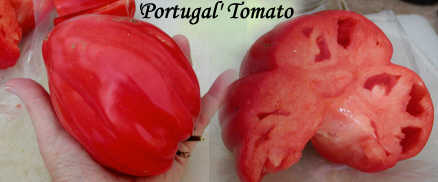 1) Portugal Beefheart Tomatoes (my favourite). These are massive and meaty tomatoes. Delicious! Indeterminate, very fast growers, always the first ones up in the spring, outdistancing all others very quickly. (Warning: Definitely indeterminate! LOL!) I got the seed years ago from a gardener who's great grandparent brought them from Portugal. I have no idea what the actual name is, if there is one.
2) 'San Marzano' paste tomatoes - touted to be the best paste tomatoes in the world, from Italy. They have a very thick wall and little water, making them, indeed, a great tomato for cooking! indeterminate. I find that many of the leaves on this tomato need to be cut off to find the fruit and to let the sunshine into the rest of the leaves and fruit. I trim leaves off of all the tomatoes when they begin to get in the way of the fruit growing and block the sun. Always leave enough for the plant to make food.

3) 'Ailsa Craig' tomatoes - an earlier salad tomato, medium size, red, sweet with a fabulous flavour! Indeterminate. Your normal, every day useful salad tomato and very tasty!
4) Manitoba Tomatoes- determinate. (My only determinate tomato. I like determinate tomatoes, with our short growing season!) Large 4" tomatoes in a short time.
5) Matt's Wild Cherry tomato - indeterinate, high sugar content making them very sweet! Large plant producing a bumper crop of tiny tomatoes. (These hardly ever actually made it into the kitchen.) I am going to plant more of them this year.
Just a short note here about wording, "determinate" tomatoes do not vine and will stop growing tall when they reach maturity. They will then put their effort into ripening the tomatoes already growing. These are better for short growing seasons. "Interminate" tomatoes will keep growing tall and vining until the frost takes them. These will need to be pruned when they have enough tomatoes growing on them (and pruned again and again and again. Try to convine them that they need to stop growing!) I usually prevent suckers as they grow and top the plants about Aug 1. This gives the plant time to ripen what is there. Sometimes I still have to root prune to get more tomatoes to ripen before the frost and even then we still have lots of green tomatoes.
Some tomatoes will keep green in a paper bag in a dark cool place. You can keep checking on them and bring them out even in Dec and Jan to finish ripening in the kitchen. It's worth a try and I am going to do more of that this year, since I do have a cold cellar.
I also start pruning the winter squash, hard, on Aug 1. This stops the vining growth and makes for bigger squash that ripen on time. I am growing three types of squash this year.

I am growing mainly the Hopi Black. (See my previous post 'The Perfect Squash') but also 'Hopi Gray' and turban (also called Turk's Cap). I like the turban for decorating in the fall. They are beautiful!
I am thinking I might do a "Three Sisters" garden this year with corn, beans and squash, maybe, depending on where I decide to plant the corn.
 I am growing lemon cucumbers this year for the first time! I already have the seed :-) I am quite excited about growing these! They have been around for generations but are hard to find because they don't keep very well. They don't taste anything like lemons, they are cucumbers. They just look like lemons. They have a very sweet taste and not at all bitter, like come cucumbers tend to be. I became interested in growing these a few years ago, as they are so good, but haven't actually bought seed for them until this year. (Sometimes it takes me awhile to go from thought to action. I can only focus on so many things at one time.) I like them because they are fat, making them a good shape to slice for sandwiches. We consider this to be the best use of a good cucumber! I am going to plant these in the berry garden, close to the house where I can baby them.
I will be starting these indoor in the next couple of weeks. I also plan grow a few pickling cucumbers. I don't want these two to cross so I will be separating them by at least 50', probably more like 150'. I think I will plant the pickling cucumbers in last year's tomato garden, only because the stakes are still there (and I'm lazy). That garden needs a lot of supplementation but I have a pile of old chicken manure I can use for that. That's potent stuff!
I think I will need to actually buy manure this year. Georgian Downs race track is just a couple of blocks from me. I am hoping to get some manure with bedding mixed in from there. I know that manure won't have any drugs in it! lol! (Hubby has to fix the truck first, unless he wants me to pile manure in the trunk of his car ;-)
Another thing I am going to plant this year are vining yellow beans. I'm getting too old to pick the little bush beans. I think sticking with vining beans on a fence will be a lot easier. The yellow wax beans that vine are hard to find. I can only buy locally the little commercial envelope packages of the vining yellow beans. The boxes and large bags of seed are readily available for the bush variety but, as I previoius stated, I don't want those. I find this frustrating! I may buy a few envelopes of the vining yellow beans to grow stricly for seed for next year. That means I will have to do another year of crouching to pick beans. Green beans do come easily and cheaply in vining types, and I will plant those, but we like the yellow ones better. They are a must in my garden and next year, at least, I will have only vining ones.
Maybe what I need to get is a little stool to sit on, after all, there's strawberries and raspberries to pick too...
I am going to plant some vining beans on the corn in my "Three Sister" garden.
 I don't know if I am going to grow much eating corn this year. Our freezer is small so we don't have a place to keep the full ears for long (and there's no way I'm going to spend that kind of time cutting it all off the cobs! Just like I don't shell peas :-) I am, however, going to grow some red corn for fall decor and I'd love to grow some heritage blue corn! Most eating corn is a modern hybrid. Blue corn is one of the earliest varieties known, originating in South America. It has 30% more protein than the modern hybrid yellow/white corn too! I don't want the different corn varieties and colours to cross, so I will need to generate a careful placement plan for them with a great distance between. Corn is wind pollinated and can cross at great garden distances. There is also a modern cow cornfield across the road from me to consider :-( Some advice on distances for corn would be welcomed!
 Another staple we grow a lot of are sweet peppers, specifically green bells. I grow rows and rows of them, chopped, bagged and frozen for cooking, enough to keep us in peppers all year. We use a lot of them! They go in just about everything. I also have some seeds for a few 'Habanero' peppers I might grow this year. We do like a little heat in chili and so forth. We tend to use 'Tobasco' for that but I thought I would experiement with hot peppers this year. We'll see how it goes. I would like, at a future date, to make our own hot sauce, one day... (not this year!)

Another thing I want to grow, not exactly a vegetable, are luffahs (loofah) ! I have wanted to grow my own dried luffah sponges since I started making my own soap, decades ago. (Did you know that real luffah sponges are a vegetable that you can grow? Cool, eh?) I have tried a few times, unsuccessfully, but didn't really put much into it. This year I am going to plant them and baby them until I get some luffahs that are mature enough to harvest. I want to make some mats for the porch from sliced extra large ones, as well as bath sponges from the early ones and I want the seeds to sell to soap crafters. I had thought, at one time, that I might pour raw soap into a full, unsliced luffah and let it harden like that, then slice it. My very own homemade soap luffahs! This is still in the "idea" stage but I am determined to be successful in growing my own luffah sponges this year! Must start those indoors early next week!
I will also be planting the Aunt Molly's ground cherries and the chichiquelites this year but, uh (LESS THAN I PLANTED LAST YEAR!!)
I usually have plans for the flowerbed too, but not so much this year. This spring I am cleaning them out and rejuvenating them. Myself and a few friends are having a giant garage sale on my busy corner on May 5th this year. I will be selling lots and lots and lots of plants there, all gleaned from my flower beds and maybe some woodland plants and strawberry plants too. Do come by if you are in the Barrie/Innisful area that day. (If you are serious about coming and want directions, send me an email.)
Planning my garden is great fun! It keeps me from going "stir crazy" in the wintertime too. Gardening is so exciting!
Spring can't come early enough for me!!
Subscribe to:
Posts (Atom)