Saturday, February 26, 2011

Squash Review


I have grown a lot of squash variations over the years, all in search of The Perfect Squash.

This is a review of all the types we have grown and my thought on the pros and cons of each, or the ones I can remember, anyway.


Most are cucurbita maxima. I have noted the ones that are not, in their description. There are four families of cucurbita squash/pumpkins. Maxima, moschata, pepo and mixta. I have never grown a mixta (cushaw) squash, so I can't give you any information about them. Squash varieties will cross within their family, only - but they will cross within their family, definitely, unless you take steps to prevent it. If you plan to save your own seed from year to year, you will need to prevent cross pollination. Hand pollinating is a great thing and will give you a much bigger harvest, but that alone will not prevent cross pollination.

When I say a squash is a good keeper, this depends on the conditions. We have an underground, old fashioned, stone cold cellar where the squash are kept. I sit them, not touching, on wooden skids to keep them off the damp stone shelves built into the wall of 
the cellar.


These are not in any particular order.


1) The Hopi black (left) is my first choice. You can read more about them in a previous post "The Perfect Squash" (also linked above).


2) Hopi pale gray - (picture right) produces lots of very large meaty fruits. They are a pale gray on the outside, but are also very pale on the inside too. I think the darker orange colour has more beta carrotene. I wasn't impressed with the pale colour. I will still continue to grow a few of these to keep the seed since they are so rare and are disappearing from our seed base.


3) Turk's Cap (also called "Turban") - these are a good size, although a little smaller than the first two. They have a small seed cavity with a lot of meat. The entire "turban" cap part is solid meat. They are sweet, not too stringy and good. They keep for a very long time, through Feb in our cold cellar. I will grow a few of these for decoration. They are brightly coloured and beautiful, especially mixed with the little gourds, plus you can eat them!


4) Hubbard - these are excellent, all around good squash. Excellent keeper, the best we have grown. Very large, orange, meaty fruits that keep in the right conditions until warmer spring weather. My only complaint is the extremely hard shell. You will need an axe or a thick knife and hammer set to cut one in half. Don't try to peel this one! You could poke holes in it and just bake the whole thing until the skin softens, than cut it, if you can fit it into your oven. These are very large!

5) "Upper ground sweet potato" squash - (c. moschata) was dissappointed in them, not much meat and pale in colour. They are huge fruits but all empty seed cavity inside, much like a Halloween pumpkin. They will grow in poor soil, sand, clay or rock where few other things will grow, so they are good if you have a spot like that and want to grow something productive there. Good keeper.

6) Acorn - (c. pepo) delicious little squash. Good size for baking stuffed, for 2-4 people. Good orange colour, sweet and not too stringy. Belongs to the c. pepo family so will cross with any zucchini around. Good keeper. Too small to process for freezer (the reason we don't 
grow them).

7) Japanese ebisu "nutty delica" - ok flavour. Too small to process for the freezer. Ok keeper.

8) Butternut - (c. moschata) Produced lots of fruit. Good orange colour and very meaty. Has a small seed cavity in the bulb end so entire neck is solid meat. Nice flavour but needs a long growing season. Good keeper. Might grow this one again, maybe.

9) Sweet mama - not that impressed with the flavour. Too small to process for the freezer. Not a lot of meat in each fruit. Ok keeper.

10) Buttercup - productive, meaty and less stringy. Good flavour, but not as good as several others. Very poor keeper.

11) Ambercup - Sweet, dark orange colour, good texture. Small, about the size of a large acorn squash. Good for baking with a meal. Too small for processing for freezer. Good 
keeper.


12) Spaghetti - (c. pepo) Excellent keeper. Not a standard winter squash. White flesh, can be used in place of pasta or cooked on it's own. Not used in place of orange winter squash in baking recipes. Our's are still good at mid Feb, although some seeds have begun to sprout inside the squash. Will cross with any zucchini, acorn squash, spaghetti squash and Halloween pumpkins.

I did plant jumbo pink banana squash and, although they sprouted, the plants didn't do much and just disappeared over the summer. I don't have any information about them. I have also planted others that didn't grow well and did not produce any fruit. I don't usually plant those again as I just don't have the time to baby the squash.

Now that we have found what we consider to be the best of the squash, we plan to stick to just those few and not continue to grow a large variety. It's a time and focus thing. We don't have much time during the growing season and we are already focusing our attention on as much as we can manage. That said, I do plan to grow a few "sweet dumpling" squash for the first time this year.

So far we have not had any problems with the squash borer. We did have an infestation of aphids on our squash and tomatoes a few years ago, causing them to grow curled vines but it did not seem to affect the fruit production. I have grown the squash in a different location every year. Perhaps that has something to do with it.
I enjoy growing squash! They take so little time and effort to grow and the plants are so beautiful, covering a large space with huge green leaves. Well worth growing in the garden!

Friday, February 25, 2011

Vegetable Garden Planning


Spring is just around the corner here! I can actually see the ground in a few places. This is rare for late February, but you never know...

Time to do some serious garden planning!

This year I am planning to plant only what will be used and no more than we can reasonably handle with the time we have. (LOL! This is my plan every year and yet, somehow, I can never stick to it!)

I am a seedaholic. I freely admit it. I collect seeds from all over the world. I do plant most of them but always have many left over. Last year I was very good and only traded for what I thought I would actually use. I am going to start planting them after next week.

I grow vegetables, berries, annuals, perennials and vines. I am planning on growing 5 types of tomatoes, for eating and for seed, all are organic, (no GM foods here) and all are normal red tomatoes that we like to eat. I don't have time to grow anything just because it's interesting, unfortunately.

The very first crop ready to eat in the spring is the asparagus. We LOVE fresh asparagus! We have an old asparagus bed that produces a lot, and I also planted some asparagus seeds four springs ago and hope to have some of those big enough for cutting this year. They can be cut when they reach pencil size, which a few were last year. I left those to grow last year because I moved them the previous fall and wanted to give them a chance to catch up. I am excited to see what they do this year! They will need a generous helping of old chicken manure mulch as soon as the snow melts, maybe even sooner.

I am planting 5 different types of tomatoes this year. A lot of thought and experimentation has gone into what tomatoes to grow. Over the past few years I have come up with these five staples. The tomatoes we grow are heirloom tomatoes, except for the 'Manitoba', which was developed here in Canada for the short season in the prairies. It is not genetically modified but is the result of generations of breeding. Because it wasn't around 100 years ago and has been crossed in a fairly modern breeding program, it's not an 'heirloom' but it is 'organic', although you can't call it organic yourself if you use chemicals on it. People sometimes confuse the two descriptions, which are not the same thing. Both words do mean 'not genetically modified' which is what people are looking for anyway, so for that purpose they can both be used. None of my seed has been geneticallly modified but they are not 

all "heirloom".

I have grown all of these tomatoes for our own use for at least a year and am happy with them. Last year was such a bad year for tomatoes that I only got enough seed to sell from the 'San Marzano' tomatos. Hopefully this year will be better and I will have a good tomato crop for seed!

I was a test garden for a few varieties of heirloom tomatoes last year but that was a dismal failure! Blossom end rot! Every single tomato in that garden! This year I will be digging in lots of manure, lime, ash and epsom salts (for magnesium) to prevent blossom end rot.

These are the tomatoes I am growing in 2011:
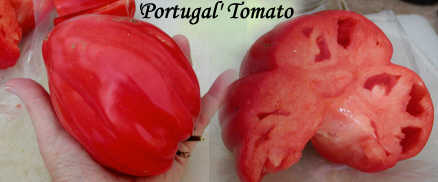
1) Portugal Beefheart Tomatoes (my favourite). These are massive and meaty tomatoes. Delicious! Indeterminate, very fast growers, always the first ones up in the spring, outdistancing all others very quickly. (Warning: Definitely indeterminate! LOL!) I got the seed years ago from a gardener who's great grandparent brought them from Portugal. I have no idea what the actual name is, if there is one.
2) 'San Marzano' paste tomatoes - touted to be the best paste tomatoes in the world, from Italy. They have a very thick wall and little water, making them, indeed, a great tomato for cooking! indeterminate. I find that many of the leaves on this tomato need to be cut off to find the fruit and to let the sunshine into the rest of the leaves and fruit. I trim leaves off of all the tomatoes when they begin to get in the way of the fruit growing and block the sun. Always leave enough for the plant to make food.

3) 'Ailsa Craig' tomatoes - an earlier salad tomato, medium size, red, sweet with a fabulous flavour! Indeterminate. Your normal, every day useful salad tomato and very tasty!


4) Manitoba Tomatoes- determinate. (My only determinate tomato. I like determinate tomatoes, with our short growing season!) Large 4" tomatoes in a short time.

5) Matt's Wild Cherry tomato - indeterinate, high sugar content making them very sweet! Large plant producing a bumper crop of tiny tomatoes. (These hardly ever actually made it into the kitchen.) I am going to plant more of them this year.


Just a short note here about wording, "determinate" tomatoes do not vine and will stop growing tall when they reach maturity. They will then put their effort into ripening the tomatoes already growing. These are better for short growing seasons. "Interminate" tomatoes will keep growing tall and vining until the frost takes them. These will need to be pruned when they have enough tomatoes growing on them (and pruned again and again and again. Try to convine them that they need to stop growing!) I usually prevent suckers as they grow and top the plants about Aug 1. This gives the plant time to ripen what is there. Sometimes I still have to root prune to get more tomatoes to ripen before the frost and even then we still have lots of green tomatoes.

Some tomatoes will keep green in a paper bag in a dark cool place. You can keep checking on them and bring them out even in Dec and Jan to finish ripening in the kitchen. It's worth a try and I am going to do more of that this year, since I do have a cold cellar.

I also start pruning the winter squash, hard, on Aug 1. This stops the vining growth and makes for bigger squash that ripen on time. I am growing three types of squash this year.

I am growing mainly the Hopi Black. (See my previous post
'The Perfect Squash') but also 'Hopi Gray' and turban (also called Turk's Cap). I like the turban for decorating in the fall. They are beautiful!

I am thinking I might do a "Three Sisters" garden this year with corn, beans and squash, maybe, depending on where I decide to plant the corn.
I am growing lemon cucumbers this year for the first time! I already have the seed :-) I am quite excited about growing these! They have been around for generations but are hard to find because they don't keep very well. They don't taste anything like lemons, they are cucumbers. They just look like lemons. They have a very sweet taste and not at all bitter, like come cucumbers tend to be. I became interested in growing these a few years ago, as they are so good, but haven't actually bought seed for them until this year. (Sometimes it takes me awhile to go from thought to action. I can only focus on so many things at one time.) I like them because they are fat, making them a good shape to slice for sandwiches. We consider this to be the best use of a good cucumber! I am going to plant these in the berry garden, close to the house where I can baby them.

I will be starting these indoor in the next couple of weeks. I also plan grow a few pickling cucumbers. I don't want these two to cross so I will be separating them by at least 50', probably more like 150'. I think I will plant the pickling cucumbers in last year's tomato garden, only because the stakes are still there (and I'm lazy). That garden needs a lot of supplementation but I have a pile of old chicken manure I can use for that. That's potent stuff!

I think I will need to actually buy manure this year. Georgian Downs race track is just a couple of blocks from me. I am hoping to get some manure with bedding mixed in from there. I know that manure won't have any drugs in it! lol! (Hubby has to fix the truck first, unless he wants me to pile manure in the trunk of his car ;-)

Another thing I am going to plant this year are vining yellow beans. I'm getting too old to pick the little bush beans. I think sticking with vining beans on a fence will be a lot easier. The yellow wax beans that vine are hard to find. I can only buy locally the little commercial envelope packages of the vining yellow beans. The boxes and large bags of seed are readily available for the bush variety but, as I previoius stated, I don't want those. I find this frustrating! I may buy a few envelopes of the vining yellow beans to grow stricly for seed for next year. That means I will have to do another year of crouching to pick beans. Green beans do come easily and cheaply in vining types, and I will plant those, but we like the yellow ones better. They are a must in my garden and next year, at least, I will have only vining ones.

Maybe what I need to get is a little stool to sit on, after all, there's strawberries and raspberries to pick too...

I am going to plant some vining beans on the corn in my "Three Sister" garden.
I don't know if I am going to grow much eating corn this year. Our freezer is small so we don't have a place to keep the full ears for long (and there's no way I'm going to spend that kind of time cutting it all off the cobs! Just like I don't shell peas :-) I am, however, going to grow some red corn for fall decor and I'd love to grow some heritage blue corn! Most eating corn is a modern hybrid. Blue corn is one of the earliest varieties known, originating in South America. It has 30% more protein than the modern hybrid yellow/white corn too! I don't want the different corn varieties and colours to cross, so I will need to generate a careful placement plan for them with a great distance between. Corn is wind pollinated and can cross at great garden distances. There is also a modern cow cornfield across the road from me to consider :-( Some advice on distances for corn would be welcomed!

Another staple we grow a lot of are sweet peppers, specifically green bells. I grow rows and rows of them, chopped, bagged and frozen for cooking, enough to keep us in peppers all year. We use a lot of them! They go in just about everything. I also have some seeds for a few 'Habanero' peppers I might grow this year. We do like a little heat in chili and so forth. We tend to use 'Tobasco' for that but I thought I would experiement with hot peppers this year. We'll see how it goes. I would like, at a future date, to make our own hot sauce, one day... (not this year!)

Another thing I want to grow, not exactly a vegetable, are luffahs (loofah) ! I have wanted to grow my own dried luffah sponges since I started making my own soap, decades ago. (Did you know that real luffah sponges are a vegetable that you can grow? Cool, eh?) I have tried a few times, unsuccessfully, but didn't really put much into it. This year I am going to plant them and baby them until I get some luffahs that are mature enough to harvest. I want to make some mats for the porch from sliced extra large ones, as well as bath sponges from the early ones and I want the seeds to sell to soap crafters. I had thought, at one time, that I might pour raw soap into a full, unsliced luffah and let it harden like that, then slice it. My very own homemade soap luffahs! This is still in the "idea" stage but I am determined to be successful in growing my own luffah sponges this year! Must start those indoors early next week!


I will also be planting the Aunt Molly's ground cherries and the chichiquelites this year but, uh (LESS THAN I PLANTED LAST YEAR!!)
I usually have plans for the flowerbed too, but not so much this year. This spring I am cleaning them out and rejuvenating them. Myself and a few friends are having a giant garage sale on my busy corner on May 5th this year. I will be selling lots and lots and lots of plants there, all gleaned from my flower beds and maybe some woodland plants and strawberry plants too. Do come by if you are in the Barrie/Innisful area that day. (If you are serious about coming and want directions, send me an email.)

Planning my garden is great fun! It keeps me from going "stir crazy" in the wintertime too. Gardening is so exciting!

Spring can't come early enough for me!!


Tuesday, February 22, 2011

Amazing Pork Barbecue Sauce


This is a fabulous pork barbecue sauce!

Approx 4-5 lbs pork shoulder (more if bone in) - cut off cap (big fat part); then rub with yellow mustard & salt & pepper

Cook in slow cooker until meat is soft & falls apart easily (approx 7 hrs in slow cooker 
on low)

Remove & chop or shred. Drain off liquid. Replace in cooker & add pre-prepared sauce. Leave on low until ready to eat. Stir occasionally.

Kansas City Sweet Sauce
1/4 tsp allspice
1/4 tsp cinnamon
1/4 tsp mace
1/4 tsp black pepper
1/2 tsp curry
1/2 tsp chili powder
1/2 tsp paprika
1/4 cup white vinegar
1/2 tsp hot sauce
1 cup ketchup
1/3 cup molasses

Wednesday, February 16, 2011

A Cat's Play for Attention


This is a common picture when I'm trying to do some close work. Any chance for some attention is a good time for Shadow. He's a sweetheart, for all he's a tough cookie! He's a great mouser, lining them up on the front porch when they are active!

This past weekend the snow and ice melted somewhat and fell off the house and roof. There was about an hour of time when a lot of big noise was coming in from outside. Shadow didn't hide under the couch (his favourite spot when a stranger comes into the house). He sat up alert beside me and growled loudly the whole time, ready to do battle. When there was more ice falling noise from the bedroom window upstairs, he ran up there to meet it, growling all the way! With all this courage, he is very gentle and sweet. You can pick him up roughly or push him off the counter top (a rare occurrence) and he will just purr the entire time. No matter what you do, if you touch him, he purrs. I have never felt his claws or teeth, even in play.

When Hubby put a single empty can of tuna on the floor for them, Abby ran up first and began to lick it clean. Shadow came behind her and licked her ears, encouraging her to keep eating. When she was half finished, she stepped back and let him have his share. It was so sweet. They really have bonded and he takes care of her. He goes to look for her if she doesn't come when I am feeding them. (He's ALWAYS there when I am feeding them! lol!)